
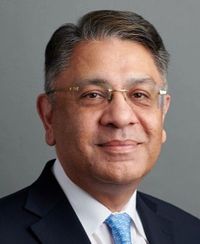
Ajay Kaul, MD
Changing the Trajectory of Pediatric GI Care by Ajay Kaul, MD
- by Ajay Kaul, MD
- Director of the Neurogastroenterology and Motility Disorders Center at Cincinnati Children’s Hospital
- Healthnetwork Foundation Service Excellence Award Recipient - 2021, 2024, 2025, 2026
A Conversation with Dr. Ajay Kaul
Imagine you’re a mother who has had to watch your child suffer with mysterious belly pain for years. Or you’re a father who has held your kid’s hand through countless needle sticks at four or five clinics. Now imagine you’re that parent who finally makes your way to Dr. Ajay Kaul and his gastroenterology team at Cincinnati Children’s Hospital. And finally—finally! —you get answers. When families come to us with little ones who are struggling with GI issues, Dr. Kaul is always at the top of our list. Even though he is highly sought after and his time and expertise are in constant demand, he always makes himself available to Healthnetwork families. Our members tell us Dr. Kaul is warm, accessible and brilliant. This is why he has been honored four times by Healthnetwork Foundation and our members with a Service Excellence Award. We hope you enjoy this conversation with Dr. Kaul.
- Healthnetwork Foundation (HF):
- We know you today as one of the world’s experts in pediatric neurogastroenterology. Take us back in time and tell us how you first became interested in this kind of work.
- Ajay Kaul, MD (AK):
- My father is a pediatrician in India and when I was young he would often take me to his clinic or bring me along when he did his hospital rounds. That’s what first triggered my passion for pediatrics. I became interested in gastroenterology while doing my residency and then in the field of neurogastroenterology during my fellowship. What I’m most passionate about is taking care of children with special needs who have GI problems. I went to medical school in India, and I saw an enormous discrepancy between the care of neurotypical kids and kids with special needs. Then I moved to the United Kingdom for further studies, and it was better there, but still not great. After moving to the United States, I found that of the three healthcare systems I had experienced, it seemed to me that this country takes the best care of kids with special needs.
- HF:
- We have directed several families to the pediatric neurogastroenterology program at Cincinnati Children’s—a program that only exists because of you.
- AK:
- Even though the United States was the best I’d seen so far at taking care of kids with special needs, I wanted to take it a step further. Kids with special needs tend to have a much higher prevalence of GI problems than neurotypical kids. This can be due to a variety of factors—genetics, dietary restrictions, anxiety, medication side effects—and likely other reasons we have not yet uncovered. One of my nurses, Jackie Dierig, shared my passion, and together we developed the best pediatric neurogastroenterology center in the nation. That was about 25 years ago. Later I was lucky to have worked with another extraordinary nurse, Gerry Hennies, who shared my goal to provide better GI care for children with special needs and together we started a program for GI care for children with special needs about 15 years ago. I’m pleased to report that both these unique programs are doing exceptionally well with referrals coming from across the nation.
- HF:
- That must be rewarding.
- AK:
- It’s very rewarding. For most of our patients, we are the second or third or fourth stop. By the time they come to us, they’ve already been through a lot. I remember one teenage girl with a disorder of gut-brain interaction (DGBI) we helped recently. She had been seen by seven other medical clinics around the country. She had such severe stomach pain and nausea that she had stopped eating and drinking and had to be placed on a feeding tube due to significant weight loss. DGBI is a term we use for a group of disorders that are often hard to measure objectively. In many cases, all the tests will come back normal, but the symptoms are very real. Patients with DGBI often get dismissed by medical providers. Patients get the message, directly or indirectly: “It’s all in your head.” We were able to explain to this family about DGBI and treat this girl with an IB-Stim device that is a new modality for delivering neuromodulation therapy, as well as some cognitive behavioral therapy. Prior to her illness she had been an accomplished ballet dancer, which she’d had to quit due to debilitating pain, nausea and weight loss. After her treatment with us, she had significant improvement in her symptoms and was able to dance again.
- HF:
- What are some exciting developments you’ve seen in your time in this field?
- AK:
- When I was a fellow here, neurogastroenterology was more or less an established super-speciality in the field of adult gastroenterology. There were only a handful of pediatric GIs who had worked with their adult GI colleagues and had any experience in this field. Over the past three decades, we’ve learned so much across the board—genetics, testing, diagnostics, technology, how all the muscles and nerves play into gut health, and the role of our microbiome. I could go on. The field of neurogastroenterology has really blossomed in terms of knowledge and technology, which has translated to better care of folks with this group of disorders, resulting in less morbidity and mortality, as well as decreasing healthcare costs.
- HF:
- What developments do you hope to see happen before you retire?
- AK:
- I hope to see a cure for many of the motility disorders and better quality of life for children with special needs. There is a lot of fascinating research going on at Cincinnati Children’s Hospital, like growing human intestinal organoids and using them to treat gut disorders, and we are rapidly progressing towards cures for some of these motility disorders. I love working here because there are a lot of people with similar interests and we are constantly learning and improving on how we deliver care. Hopefully soon we will have a cure for disorders like Hirschsprung disease, Achalasia and intestinal pseudo-obstruction.
- HF:
- Let’s talk more about research. What are you working on these days that you’re excited about?
- AK:
- We have several clinical studies going on at our NGM Center right now, and the faculty mentors are working with their mentees (medical students, residents, fellows, and nurses) to reveal new information that is filling the gaps in knowledge in childhood GI disorders. For example, we’re looking at predictors for success in cases where pneumatic dilation is performed for achalasia. We’re studying the reasons why some patients with antegrade cecostomy enemas for severe constipation don’t do as well over time.
- Using new technology, we’re redefining esophageal disorders in people who have Triple A syndrome. I’m on an academic clinical track which means I’m not required to do research. It therefore also means I receive no funding from the hospital for research. Any research I do, and I have published nearly 100 papers, is on my own during off hours, using funds from the generous donations we have received from grateful families. This is why grants like the one from Healthnetwork and donations from families are extremely helpful. They are my only source of funding for research at this time. We have so much to learn still. In pediatrics we don’t have as much knowledge about most disorders as we do for adults. Adults are much easier to do research on. But someone’s got to do pediatric studies and learn how things change with time as the child grows. Children are not compressed adults! Any clinical research we do is because of private philanthropy. I hope the families who donate realize just how important those gifts are! Just as one example of how these gifts can multiply—I used the funds from the last donation from Healthnetwork Foundation to take three nurses with me to a conference. Today those same three nurses are working with an international health network to train and implement new technology in Abu Dhabi hospitals in UAE. For some families, ten or twenty thousand dollars might not seem like much in the context of medical philanthropy, but its benefits can really spread and multiply and have a much larger effect.
About Healthnetwork Foundation
For more information about anything shared here, please contact Healthnetwork President Megan Frankel at mfrankel@healthnetworkfoundation.org.